Rabbi Avraham Dov of Avritch passed away on 12 Kislev 5601, corresponding to 1840. The book that bears his name and preserves his teachings was not printed during his lifetime.
His discourses were delivered over many years on Shabbat and Jewish festivals, first in Eastern Europe and later in the Land of Israel. His students recorded the teachings, and the manuscripts were reviewed and edited by the Bat Ayin himself.
The first edition appeared in Jerusalem approximately seven years after his passing.
Jerusalem, 1847
Bat Ayin was first printed in 1847—5607 in the Hebrew calendar—at the Jerusalem press of Rabbi Yisrael Bak.
Yisrael Bak was a pioneer of Hebrew printing in the Land of Israel. He had operated a press in Safed before the devastating earthquake and later established his printing activity in Jerusalem.
Producing a Hasidic work in mid-19th-century Jerusalem was a considerable undertaking. Printing machinery, type, paper and binding materials were difficult to obtain, while the Jewish community faced challenging economic conditions.
Despite these obstacles, Jerusalem was selected as the place where the teachings would first appear in print.
Why Was It Printed in the Land of Israel?
The publisher’s introduction to the first edition states that the book was printed in the Land of Israel following an instruction from Rabbi Yisrael of Ruzhin.
That choice carried special significance. Love for the Land of Israel was central to the Bat Ayin’s teachings and life. He left his rabbinic position in Europe, made aliyah and settled in Safed despite the hardships and dangers.
A later edition includes words attributed to the author explaining that he had placed something of the Land’s holiness within his writings. The title Bat Ayin was also associated with the biblical description of the Land as constantly watched by the eyes of God.
The location of publication therefore reflected the character of the book itself: teachings delivered partly in the Diaspora reached their first printed form in the Holy Land.
Teachings Recorded by His Students
The first edition also illustrates how the teachings of many Hasidic masters were preserved.
The Bat Ayin delivered discourses before his students, who wrote them down. The manuscripts were subsequently reviewed and refined. The book was therefore not originally composed as one continuous work. It is a collection of teachings delivered over many years and organized according to the weekly Torah portions and festivals.
That structure remains part of the book’s appeal. A reader can open Bat Ayin to the weekly portion and encounter a discourse on faith, humility, repentance, love of God or the holiness of the Land of Israel.
The Subscribers Who Awaited the Book
Some copies of the first edition contain a final-page list of subscribers who ordered the book in advance. The names include residents of Jerusalem, Safed, Tiberias and Hebron.
This is more than a list of purchasers. It documents Jewish life in the Land of Israel in the mid-19th century and the connections between its four holy cities.
By committing to buy the work before printing was complete, subscribers helped finance its publication. Their participation shows that the Bat Ayin’s teachings were already sought after during the first years following his passing.
From a Rare Edition to a Work Studied Worldwide
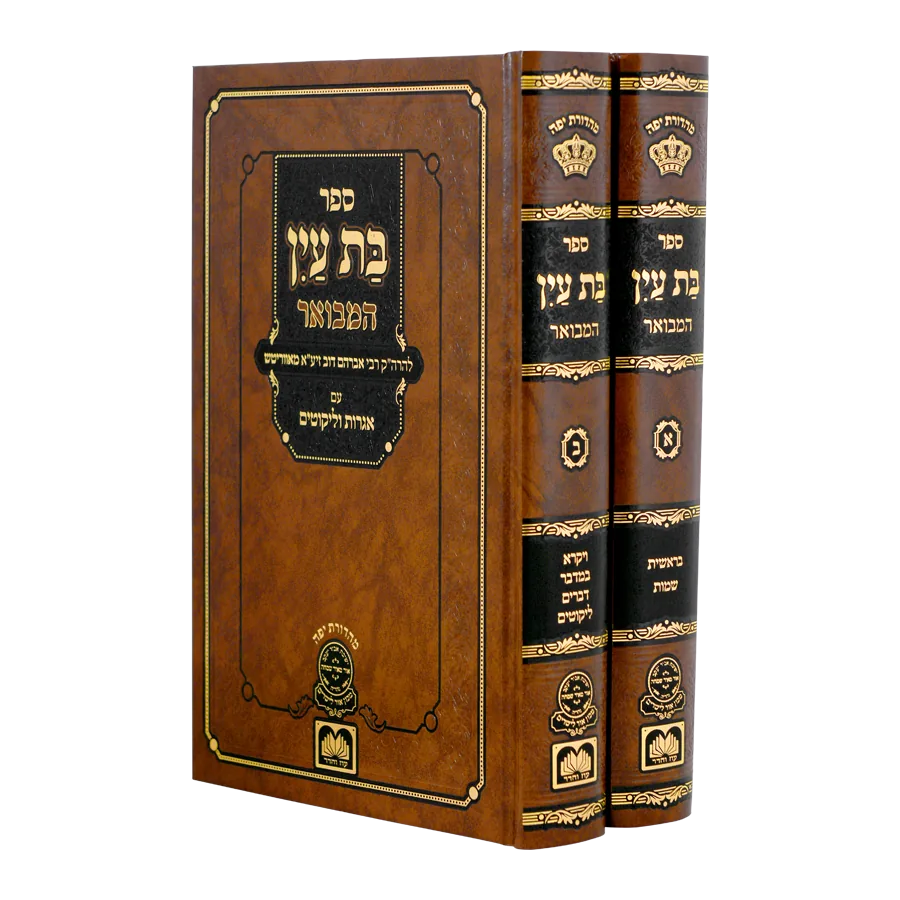
The first edition comprised 125 leaves. Bat Ayin has since appeared in numerous editions, including versions with punctuation, vowel marks, headings, indexes and explanatory notes.
Today it is studied in batei midrash, printed editions and online Torah libraries. A collection that began as discourses recorded by students became one of the works most closely associated with Hasidic thought and the holiness of the Land of Israel.
The book’s journey—from Avritch to Safed and from handwritten manuscripts to a Jerusalem printing press—is an essential part of the Bat Ayin’s legacy.